Friday, March 19, 2021

POLITICS PUTTING WISCONSIN IN RACIST SPOTLIGHT

 By Dominique Paul Noth

Standing out from the hundreds of political email solicitations I receive each week was one March 18 from A Better Wisconsin Together (a new  research and communication conduit for progressives) bluntly stating “It’s racist!-- Wisconsin is better than Ron Johnson,” and then asking for funding to oust him in 2022.

I applaud the sentiment – but I’m a political realist and I have to ask why Johnson is turning more Trump than Trump, defending the “good people” who brutalized police and the US Capitol Jan. 6, painting the Black Lives Matter people as akin to pagan devil worshippers and, I fully expect in the next few days, coloring Asian women as sex traffickers – all the old tired saws of bigoted white supremacists. Does he hope the voters in Wisconsin will rejoice in such racism?

Yes he does. He’s gambling that this sudden harsh extremism – from a Senate back-bencher who has been more relied on for keeping his mouth shut and his voting geared to the rich business world he came from – is just what will raise his shaky poll numbers.  And cunning Ron, he has an escape hatch.  If his numbers don’t go up, but instead go down because Wisconsin is not as racist as he hopes, he can always pull the plug on running for a third term, as he once vaguely promised.

The horror for Wisconsin is that we will be attracting some of the most outrageous Republican attacks in the next year and live with the confident GOP expectation of victory because of how extreme the GOP gerrymandering of districts in 2011.  Statewide elections like governor or senator are one thing the Democrats can win though apparently only by small margins, but when you dip down into US House districts and state legislature districts, the GOP imbalance defies the real majority vote. In 2018 Democrats may have received 205,000 more votes than Republicans, but the GOP has a  27-person advantage in the Assembly.  All this has caused a newspaper that has eschewed editorials to actually run one!

The split in the state is more than rural versus urban, more than white versus black and brown. Compare the House district maps, so understandably blockish before 2010. Then compare with the map used since 2010.  A  lot of communities will weep, but note the  impact on minority isolation,    particularly in the Milwaukee area

The Republican Party has happily made itself the ugliest side of  the creature it was 50 years ago, elevating the racism that was a smaller but effective part of its message. That  was the time the GOP attracted many Wisconsin families as it encouraged white flight from the big cities and warned the working folks that the Democrats would tax them to death. 


Under the new GOP and the new map, the controlling taxing party is the GOP  and  the hostility has gotten worse, slandering gentler politicians like Gov. Tony Evers and US President Joe Biden as if this was still Walker's Wisconsin.   The basic humanity of the Democrats in charge make the GOP even more excessive in their barrages because the party is finding it harder to convince voters.

Turns out the Wisconsin Republicans  can still rely on gerrymandering to continue these attacks without much fear of losing.  So they are attacking unions, attacking worker incomes, attacking immigration, attacking the mail-in ballots they once relied on  and promoting tax cuts for the rich (their vision of the people responsible for creating jobs). 

Meanwhile the Democrats tried to make headway with a big-tent approach, a sincerely meant but difficult to believe reaching out to GOP politicians. That sort of comity made the Democrats look weak and now many in their camp are demanding a harsher willingness to fight.

Once thing is for sure. The Republicans won’t give them any power. By the thinnest of margins, the Democrats did get power – led in the state offices by Evers and now led in the nation by Biden.  Frankly, I knew Biden would win Nov. 3, 2020,  though the networks had to wait painfully for the numbers to unfold over days. I believed, despite many doubting Democrats, that the Rev. Raphael Warnock and Jon Osoff would survive in Georgia, giving the Democrats the tiniest of margins in the Senate to go with the House.

But I also knew Mitch McConnell would begin immediately plotting to turn the Senate back in 2022.  State legislatures controlled by Republicans would be the key – and they have introduced some 250 bills across the nation to make voting by minorities harder.

The Wisconsin bills to cut down on minority voters will be vetoed by Evers, but the gerrymander will be hard to change in the next year.  The fate of the entire country hangs on a thread and Wisconsin already is showing frays.

Biden’s $1.9 trillion rescue bill is actually astonishing out of the gate, collecting eight bills within it, any one of which would be a headline. But it didn’t get a single Republican vote, and the maneuvering is hot and heavy to bend the senate filibuster rules to see if anything else gets passed, since there is only one more time for anything else under the senate resolution rules of 50-50.  Otherwise it has to be 60-40 under the sort of bills Biden wants.  There may be more intelligent GOP senators around than Ron Johnson – there may be several who believe in voting rights and background checks and other issues the majority of America supports. The Democrats are hoping, perhaps in vain, that they can inch up on the filibuster rules.

But Johnson is testing the Trump hold on the American voters in Wisconsin. Progressive feelings about that November election are still partly glum because while seven million more voters went for Biden, Trump did get 73 million voters.  Think about that.  I suspect those supporters have shrunk in half, but 30 million is still a big deal that the GOP must deal with and coattails are a weird thing.

In states that Trump carried in the electoral college in November, there were better Democratic candidates running for the Senate for both incumbencies and open seats.  Several even led in the polling.  But every state whose electoral votes went to Trump picked the Republican senate candidate, just like every state that went for Biden picked the Democrat (Mark Kelly and John Hickenlooper).

When you put names to the losses, the pain magnifies, as I wrote about in October. Wasn’t Teresa Greenfield a better liked candidate in Iowa than Joni Ernst?  Polls said so, but Trump carried the state and so did Ernst.

In 2022 Chuck Grassley will be 89 but he is thinking of running as he has since 1980 – who will take the field against him in a state that actually longs for Biden-like agriculture gains, more wind turbine business and climate change realities? 

In Kansas it was Barbara Bollier,  a former Republican physician supporting health care who led the polls against an Obamcare-hating doctor – and yet he won because Trump had the state wrapped up.  Again and again this was the story – the Carolinas, Maine where the electoral college split, Texas where the female candidate against John Cronyn was less known but polled strongly, indicating where Texas might like to go.

This time Biden squeaked by with Senate control even as he dominated in the popular vote.  But if the Republicans are no longer a national party, they still are a state party and they are going to use those levers for all they can, forcing the Democrats to contemplate  a level of combat that the personality of their new leader has avoided.

All this current political tempest may be forcing change on a tried and true American voting pattern.  Almost unconsciously voters have split control among the two main parties – still do even in an era where the ranks of Independent are growing, many of them fleeing according to polls from Republican ranks. But from fearing one party would run away with the process, the voters may be wishing the country would run rather than lamely waddle.

We may be reaching the point – contrasting Biden’s successes with Trump’s shenanigans – that the voters may be jumping more to the progressive side, forcing the Republicans to count even harder  on their state controls to keep them in the game.

On March 16, New Jersey Sen. Bob Menendez broke a Senate custom on the floor to not use derogatory terms to describe a colleague, but he did and I applaud him.  He called Johnson a racist.

Explained Menendez: “Look, I get no one likes to be called racist, but sometimes there's just no other way to describe the use of bigoted tropes that for generations have threatened black lives . . .  I don't think the senator is ignorant of the fact that for centuries in this country white supremacy has thrived on using fear to justify oppression, discrimination and violence against people of color.”

Yet Johnson is depending on this approach as appealing to Wisconsin voters. Are we really the people he thinks?


About the author: Noth has been  a professional journalist since the 1960s, first as national, international and local news copy editor at The Milwaukee Journal, then as an editor for its original Green Sheet, also  for almost two decades the paper’s film and drama critic. He became the newspaper’s senior feature editor. He was tapped by the publishers of the combining Milwaukee Journal Sentinel for special projects and as first online news producer before voluntarily departing in the mid-1990s to run online news seminars and write on public affairs. From 2002 to 2013 he ran the Milwaukee Labor Press as editor. It served as the Midwest’s largest home-delivered labor newspaper, with archives at milwaukeelabor.org.  In that role he won top awards yearly until the paper stopped publishing in 2013. His investigative pieces and extensive commentaries are now published by several news outlets as well as his DomsDomain dual culture and politics outlets.  A member of the American Theatre Critics Association at its inception, he also reviews theater for Urban Milwaukee. 


Tuesday, October 13, 2020

STATEHOUSE ELECTIONS ALSO IN NATIONAL SPOTLIGHT

 By Dominique Paul Noth

In Wisconsin, we don’t have a statewide election on Nov. 3, just a series of littler ones, county by county and district by district.  Sen.  Ron Johnson should go to bed every night thanking his corporate gods that he is not on the ballot this year. Imagine how quickly he would be gone.  

I know there are still national worries that the state won’t go for Biden. I'm beyond that.  I’m even holding out hope that the Democrats may pick up a seat in the US House, knowing I’m mainly alone on that one. 

There’s a simple reason.  I know many who live in Wisconsin District 5.  They’re sort of neighbors if you live in Milwaukee County.  Many families moved into that district 40 or 50 years ago out of white flight from the city! Horrible reason. 

But some  families have grown up beyond that.  Certainly their children, some of them, have set bigotry aside.   I know many today who worry about their own children, about the environment, about basic fair treatment.

I just can’t believe in this age of covid-19 and a moderate Democratic governor, Tony Evers, trying to do  a few basic things to protect the people,  that ANYONE SANE would be voting for Scott Fitzgerald! Yes, even in a district that clung stubbornly to Jim Sensenbrenner, but he at least  could cough  up a few hairballs now and then  about civic rights. He was not quite the one-man blockade on the state social highway that Fitzgerald has become. 

Fitz is also a coward, hoping others will do his dirty work. He runs half of the GOP legislature as senate majority leader and has openly defied Evers, but he also knows that health care and pandemic protection are important to voters.  So rather than openly oppose Evers’ 60-day emergency mask mandate, which the governor can renew, he tried to get a right wing legal stalking horse to strike it down.  A state judge in October saw through the deception.

Tom Palzewicz
But common wisdom says the Fitz will beat Tom Palzewicz, a moderate Democrat and business guy with true empathy for residents. I just can’t understand how a 5th District voter can put Tom and Scott side by side and not leap into Palzewicz’s camp . . . but in a hyper partisan age, it takes all kinds to doom their district for the next two years!

I digress. What I wanted to emphasize was how,  despite Biden and Trump on the top, Wisconsin voters need to work down the Wisconsin ballot as well as look at other state races, too, and there are national movements to help do that.

It’s among the aspects of  Internet freedom at everyone’s fingertips. No race is too far away to get financial, computer and telephone help.

One such group is openly dedicated  to underwrite  Biden by changing the nature of the state legislative chambers lined up against him, looking at the local issues as well as the national ones and weighing  who will approach those intelligently.  Few people know the names or abilities of people running for the statehouses in Michigan, Florida or states far and wide.

In fact, few people in one Wisconsin district know the name or the issues of those running next door or a few county highways down the road.  Everyone needs help to figure out those races.

Now meet EveryDistrict. It has set out to vet state legislative candidates around the nation, the ones that don’t have the money or the reach of US House and Senate candidates.  It’s blunt about what it does: “We have tabulated the latest competitiveness, demographic, polling, and fundraising data to chart out which of our candidates would most benefit from your hard-earned dollars in these final weeks. These candidates don’t represent everyone we would like to win – that’s all of them – nor do they represent the people most likely to win. These are the on the bubble candidates where that next dollar will make the most difference.”

EveryDistrict offers direct links for choices to Act Blue.  It is one-step fund-raising.

Not every state and not every race, though, as would be expected from the Democratic Party’s own activist groups.  EveryDistrict remains cautious that their choices also have the active  grassroots campaigns to succeed.  They don’t dump the book of state houses on visitors but select out the chambers they believe that voters can impact.  Right now they’re big on Kansas.

Wisconsin is likely to emerge as a state that goes whole hog for Biden in the electoral college but remain in Republican hands in the state legislature, causing more migraines for Evers. Our state’s difficult situation also causes headaches for the folks behind EveryDistrict (who include some well known government experts in the state).

One reason the GOP expects to remain in state control is the lopsided gerrymandered GOP majority in the Assembly, 63-36, built up over years of jiggling the demarcation lines.  EveryDistrict reminds voters they have to flip 14 (!) seats to take  back the Assembly but they identify every Democrat running  and pick the most likely  in the Assembly (using yellow Endorsed and pink codes) and ways to contribute to everyone, always emphasizing those they think have a chance.  Even lowering the margin of GOP control could pay enormous dividends, restoring the power of the Democratic vote throughout the state.

On working through the website, I noted of the 16 in the Assembly they had endorsed I agreed with every one – and had actually written about several. EveryDistrict is also hosting online sessions with Milwaukee County Executive David Crowley and city of Milwaukee Mayor Tom Barrett.

Individuals can also use the site to directly donate to the Wisconsin Fund on Act Blue, which will split donations evenly among 7 different Democratic campaigns whose data and polling shows they can win, but are candidates who need resources in the final weeks of the campaign. As usual, 100% of proceeds will benefit campaigns.

EveryDistrict is not optimistic about the Wisconsin Senate, though the Democrats are much closer, needing only to flip three seats. But only half the Senate is up for election in 2020 and  EveryDistrict has just two senate seats high in its likely flippable list.  The Wisconsin Democrats have more.  But EveryDistrict admits bluntly that “the Wisconsin Senate is not a target chamber in 2020,” while “the Wisconsin Assembly is one of EveryDistrict’s priority chambers.” One reason is that the organization wants to see action on the ground and if more senate districts get organized that  could change.  

Certainly the mood of the state is changing, largely as positive covid-19 tests climb to epidemic proportions. Many in northern, western and rural communities that thought they would be untouched are being touched harshly – grandparents, kids, money earners, essential workers. After going blithely along and allowing politics to intrude on safety precautions, they and their children are facing some ugly droppings.  Yet  the Republicans in the state legislature continue to attack the Democratic governor’s health-based instructions to wear masks and follow social distance protocols. 

The GOP legislature out of vicious politics is resisting common sense, it seems to me, and more and more rural voters and educators I contact feel the same way. It’s even producing stories throughout Wisconsin like this one in the Journal Sentinel. That disappointment and anger are  filtering  through communities that once never thought of voting Democrat.

I don’t know how that will affect the final vote, but one thing is clear. The lingering pandemic has changed the bloc voting expectations of the political parties.


About the author: Noth has been  a professional journalist since the 1960s, first as national, international and local news copy editor at The Milwaukee Journal, then as an editor for its original Green Sheet, also  for almost two decades the paper’s film and drama critic. He became the newspaper’s senior feature editor. He was tapped by the publishers of the combining Milwaukee Journal Sentinel for special projects and as first online news producer before voluntarily departing in the mid-1990s to run online news seminars and write on public affairs. From 2002 to 2013 he ran the Milwaukee Labor Press as editor. It served as the Midwest’s largest home-delivered labor newspaper, with archives at milwaukeelabor.org.  In that role he won top awards yearly until the paper stopped publishing in 2013. His investigative pieces and extensive commentaries are now published by several news outlets as well as his DomsDomain dual culture and politics outlets.  A member of the American Theatre Critics Association at its inception, he also reviews theater for Urban Milwaukee. 


Saturday, October 10, 2020

ELECTION COMES DOWN TO WHO BIDEN CARRIES WITH HIM

 By Dominique Paul Noth

Trump turns down a virtual debate because he can’t throw his arms around a computer screen and slobber his voters to death.   Biden says he’ll debate anywhere anytime as long as he is not locked in a room with a slob shedding virus.  And so the debate to debate goes, canceling the second and leaving the third in limbo. But it won’t matter because we will count the votes Nov. 3 (and maybe a few days longer) and realize the real results are not just a Biden victory, which seems assured.

But who will he carry with him across the finish line, particularly in the Senate? 

Suddenly national media is starting to explore those other names, even offering profiles here and there.  These largely are names unknown to most national voters – and more names than ever   because of a staggeringly expanded map unlike anything the pollsters guessed a few weeks ago.

If Biden does hold town halls with voters, despite the push of his advisers to make all such appearances about national issues, he would be well advised to indicate his hopes state by state. With seven million already having voted, it  is high time to start introducing to the public the Senate hopefuls he is counting on, and thus encourage voters back in their home states to fill in more than his name on the ballot:

Barbara Bollier
Barbara Bollier  of Kansas, a former Republican and respected doctor who is running ahead of her senate opponent in the weeks before the finish line, a closing kick that is scaring Republican money to death in a state long put in the GOP column.

Sara Gideon, a Maine legislative leader who is several poll points ahead of  Susan (“maybe I will be independent , or maybe not”) Collins. I  have described Collins as so wishy-washy she is likely to test both positive and negative in the covid sweepstakes.  She surely is in  peril of surviving.

Mark Kelly, former astronaut and well known spouse of Gabrielle Giffords, a national spokesman on sensible gun control who in Arizona polls is destroying an existing GOP senator appointed by her own party.  This is another win the Democrats long to lock up.

Theresa Greenfield

Theresa Greenfield, now slightly ahead in Iowa polls against Joni Ernst – in a state that no longer seems happy that it went for Trump after twice supporting Obama. Greenfield is a fascinating life story, a farm kid who went to college, was widowed young and now is in a second marriage with grown children and a progressive agenda. She’s got a deeper broader home-spun appeal than Ernst ever had.

Cal Cunningham, a retired military officer and state politician who is beating Trump enabler Thom Tillis in North Carolina. He ran into some headwinds with some sex banter he had long distance but  even with that cross – exploitable in the South – he is out-raising and out-arguing Tillis.

John Hickenlooper, a former Democratic presidential candidate and popular Colorado governor noted for posing with a beer and a banjo.  He is slightly ahead in a tight race against incumbent Cory Gardner.

Steve Bullock, again a former presidential candidate and popular governor who may turn the usually red Montana blue in his seesaw race against incumbent GOP unknown backbencher Steve Daines.

Jaime Harrison
Jaime Harrison of South Carolina, a veteran Democratic leader who is tied or  ahead of GOP’s Lindsey Graham (depending on which poll you credit). It’s  a turnaround in a state that many thought would remain red.  But thanks to Graham’s constant flip-flops he is in deep trouble in a flurry of ads using his own words to confirm his foolishness!

Amy McGrath, running tight against Senate majority leader Mitch McConnell in Kentucky. No one fully believes a former military pilot with scant political experience can beat the canny Mitch, but she has raised considerable money on the Internet and has shown experience in campaigning while he struggles to hold his troops together.  Will his  push for a new conservative justice please voters or stir the opposition?  How long can his turtle-like conservativism keep him in the game?  Or is his likely loss of the majority a growing factor  driving voters to McGrath?

Jon Ossoff, a former investigative journalist and security analyst is leading GOP’s David Perdue, a sitting senator fighting corruption accusations in Georgia polls.  Georgia! A once Trump state where there is also another senate race the Democrats eye:

The Rev. Raphael Warnock, the senior pastor at Atlanta’s famed Ebenezer Church,  is ahead in a special Nov. 3 election against both  appointed senator Kelly Loeffler (another corruption accused) and her internal GOP challenger, fast-talking Rep. Doug Collins (they are both trying to cling to Trump’s backside).  The top two finishers face off in January if neither gets 50% on Nov. 3, and did I mention Warnock has the edge? In Georgia?

MJ Heger
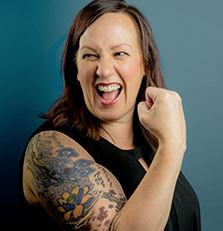
And now Texas, too!  MJ Heger, another retired female military pilot,  is making muscular inroads  against Sen. John Cornyn who has been flailing trying to explain his negative health care votes and allegiance to Trump.  It’s another race that no one had on their charts until the last few weeks.

These are the most likely victories or close contests in an expanded election map, but Trump’s continuing failure and weakening threats have actually raised hopes even in  the states the Democrats didn’t consider.  The list keeps growing. Among the Democratic Senate candidates behind but charging hard are:

Alaska!  Yes, commercial fisherman and physician Al Gross (not the best name for a candidate but easy to remember) is creeping within percentage points of his Republican opposition for Senate.

Al Gross
Mississippi!  A state once assured for Republicans sees former Clinton cabinet member Mike Espy, an African American, making inroads against Sen. Cindy Hyde-Smith who has wrapped herself in Confederate glory at the same time as the state is trying to shed the mantle of its past. If Mississippi starts asking itself what power will their senator have if Biden is the president, Espy could jump higher and faster by Election Day.

Idaho!  Guaranteed Trump territory where noted tribal activist Paulette Jordan is fighting for attention from way behind and has been helped mightily by the health care issue and Emily’s List, an influential organization devoted to encouraging progressive Democratic women.

Adrian Perkins
Louisiana!  There are special election rules Nov. 3 putting GOP Sen. Bill Cassidy against a slew of Democrats, the two top vote-getters advancing to a January face-off if neither gets 50%.  But now the Democrats seem to have coalesced behind Adrian Perkins, the independent and forward looking mayor of Shreveport who is turning the Louisiana race into something worth noting. Fifty percent seems too high for any candidate, which means Perkins may face off against Cassidy in 2021 when a Democratic senator will be even more appealing.

Even West Virginia! It’s the longest of long shots. But Paula Jean Swearengin, the coal miner’s daughter and environmental activist who did poorly in the 2018 primary against very moderate Democrat  Joe Manchin, now is trying to make inroads against very right wing  GOP incumbent Shelley Moore Caputo.  She acts undaunted by Caputo’s 17% advantage as of Oct. 8.

One reason for optimism among the unlikely as well as the quite possible is the clear Biden surge. Campaign money flows toward the winning side.  Even a hundred to one shot like Swearingen is like a Las Vegas betting pool  – someone will buy a ticket! And Alaska, Louisiana and Mississippi are locations of fast moving change that confound traditional expectations.

Even most  Democrats trying to preserve their seats – Dick Durbin of Illinois, Jeff Merkley of Oregon and Chris Coons of Delaware – seem in solid shape.  Mitch McConnell and Betsy DeVos are raising big money against Gary Peters of Michigan. Tina Smith of Minnesota and Jeanne Shaheen of New Hampshire are also facing deep pockets but I think voters in those states won’t be fooled by the ad blitz.  Far more threatened is Doug Jones of Alabama given the enthusiasm but political ignorance surrounding the former football coach he faces.

The size of the Democratic senate takeover chances is  impressive and explains why third party GOP money, voting lawsuits and dirty tricks are on the climb.  So are Republicans trying to embarrass Biden by  ignoring their own insistence on packing the court system to demand Biden tell them now what he will do if Amy Coney Barrett makes it to high court (which would make her the third justice packed in  under the worst president in US history).

Trump and the GOP won’t climb down from the suicide ledge before the election, but progressives shouldn’t join them out there. They should welcome Biden holding his tongue, even making noises that he is not interested in expanding the supreme court.

There are practical and logical reasons to hold his fire.  He not only has to win the Senate but he has to look at – and talk to—those he wins the Senate with. Democrats are not the stoic  monolith party the Republicans have proven to be.

Look at the field! All in a general sense are progressive and support Democratic initiatives.  But they range from moderate to left, from former military officers to physicians, from commercial fisherman and other businesses  to community activists. Biden will need some time to hear what they want and will vote for. There are already some 400 bills Mitch has bottled up and a lot of clamoring voices to outline the important solutions.

Mitch and his fading sources may enjoy a few months of self-congratulations but it will be followed by a slate of new laws that could protect and expand the Affordable Care Act and other issues not directly on the SCOTUS calendar, like Roe v Wade.

And that ACA lawsuit only gets oral arguments November 10 and the right wing could itself be surprised since the Supreme Court may simply section off one part of the law and keep the rest even before Biden steps in with new expansion.

So let Trump enjoy his act of sounding deliberately  crazy – claiming  he  won’t leave office whatever the voters say.  He will fume and fuss (and the dutiful press will cover every tantrum) because he wants America to forget how  correctable are the levers of government he presumes to control and how entrenched are the forces that will make even Donald behave.

To give Biden the forces he needs to bring changes and corrections, voters around the nation, particularly those who don’t live in the states in question, had better charge up their phones and open their wallets. Even during a pandemic, the influence can reach across long distances to impact the results in other states.

And the future of the US Supreme Court? The election may remind SCOTUS of the danger of being far out of step with the public. For Biden to commit to what he will do before he knows what he can do would be foolish.


About the author: Noth has been  a professional journalist since the 1960s, first as national, international and local news copy editor at The Milwaukee Journal, then as an editor for its original Green Sheet, also  for almost two decades the paper’s film and drama critic. He became the newspaper’s senior feature editor. He was tapped by the publishers of the combining Milwaukee Journal Sentinel for special projects and as first online news producer before voluntarily departing in the mid-1990s to run online news seminars and write on public affairs. From 2002 to 2013 he ran the Milwaukee Labor Press as editor. It served as the Midwest’s largest home-delivered labor newspaper, with archives at milwaukeelabor.org.  In that role he won top awards yearly until the paper stopped publishing in 2013. His investigative pieces and extensive commentaries are now published by several news outlets as well as his DomsDomain dual culture and politics outlets.  A member of the American Theatre Critics Association at its inception, he also reviews theater for Urban Milwaukee. 


Saturday, September 19, 2020

FUTURE LOOKED BRIGHTER – AND THEN RBG DIED: UPDATED

By Dominique Paul Noth

The election elation about how well Joe Biden was doing in the polls and in campaign appearances dwindled into dread September 18 with the sad news that Supreme Court Justice Ruth Bader Ginsburg had succumbed at age 87.

Politics cut into mourning time for RBG
If ever a legal catalyst deserved a lengthy mourning period free of political maneuvering and punditry, it was the diminutive RBG.  Her decisions, dissents, personality and quotes were important to all sides beyond transforming our understanding of the law.  There were literally novenas being held for the last few years praying that she would survive her bouts with cancer so that a respectable president could pick her successor.

Now, given the nature of the partisan divide and the politics of D.C., and given a presidential election Nov. 3, this is a period of sorrow the nation will not give her. 

Quickly the Democrats’ senate minority leader, Chuck Schumer, threw back into Sen. Mitch McConnell’s face his pledge 11 months before Obama left office that it was too close to the election (10 months!) to pick Merrick Garland to replace RBG’s good friend and opinion rival, Antonin Scalia:

“The American people should have a voice in the selection of their next Supreme Court Justice. Therefore, this vacancy should not be filled until we have a new president.”  The fact that Scalia was conservative and Obama was not, of course, had nothing to do with it.

The very thought that so venal a man as Trump could name RBG’s replacement fills the majority of voters with disgust as well as fear.

But there is no question that Mitch will play politics days before the election – even maybe try to protect some threatened members by waiting until Nov. 4 to start the nomination process so they don’t have his flat reversal of a promise wrapped around their necks at the ballot box.   (It usually takes 70 days to choose, interview and hold hearings but Trump is in office until Jan. 20 even though he is likely to lose.) 

Mitch looks to be plunging right away – and to hell with backlash on his buddies. The White House will pursue fear tactics, arguing that Trump is still close despite the polls and now closer with RBG’s death, so we can’t have an eight member high court deciding a disputed presidential election. That argument is a blatant attempt to turn Trump’s false attack on mailed ballots into reality. The media is helping this vision of a protracted election season, which would be great for ratings but not likely if voters own up to the importance of the vote despite the pandemic. 

What might stop Trump cold, some say, is Republicans who in their hearts know they should have impeached Trump in February and today will resist more blatant violation of norms.   Relying on GOP conscience was always highly dubious.

What will spur Trump is his own cult. Many are only voting for him to make the US Supreme Court solidly conservative.  It might not last long given the age of the justices, but what else can galvanize the diminishing Trump base? 

The wrong timing could spur loss for some Republicans.  Lindsey Graham and Susan Collins, who are in tough races to keep their senate seats, at first pledged to not select anyone for the high court before the election – and Graham is chair of the judiciary committee! Graham has already flipped -- in fact, intends to lead the charge.  So has  former chair Chuck Grassley who signed the pledge. But other Republican senators facing tight races – Joni Ernst in Iowa, Cory Gardner in Colorado, Thom Tillis in North Carolina and newly threatened John Cornyn in  Texas  – will jump to whatever tune Mitch plays, whatever they pledged in the past.

The math is simple.  Four members of the GOP must bolt.  Lisa Murkowski in Alaska and Collins herself have taken principled stands of waiting for a new president, but only one of two conservative traditionalists who are retiring have spoke up  – Lamar Alexander said he won't resist, but there is  also Pat Roberts.  There is even a D.C. press pool on how long it will take Collins to wimp out.

No one expects Trump to honor Ginsberg’s deathbed plea: "My most fervent wish is that I will not be replaced until a new president is installed."  His backers expect defiance to remain the Trump mantra and McConnell has already signaled he will put any Trump nominee before the Senate.  Within hours of her death, gleeful Trump backers were planning how to raise campaign funds on her corpse.

It does make one wonder if Trump got any medical heads-up September 9 when he trotted out a number of candidates for a then unpredicted Supreme Court opening.  Or was he just trying to excite his base?

The news of Ginsburg made Democrats even more skittish about the presidential election – reducing her death to “another rabbit the evil magician had pulled out of his hat.” It will become Trump’s best opportunity to shift attention from his failures in handling the pandemic and explaining 200,000 bodies.  Some foolish voters may think a conservative blockade on the US court system will balance his proven ineptness.

But this dismay among Democrats was within hours followed by renewed determination to elect Biden in a landslide.  Now it has to be landslide, politicians were saying, because a flipped Senate was even more essential for Biden to get things done.  There will even be talk, which Biden will probably resist for fear of agitating the extremists further, that if they can’t stop Trump replacing her, Biden should look at new laws to reform the US court system.

State AG Josh Kaul spells out loss.
The consequence of her death was spelled out by Wisconsin’s Attorney General Josh Kaul: “Another Trump appointee on the Supreme Court would almost certainly mean the end of Roe v. Wade. It could well mean the end of the ACA and policies that reduce the transmission of the coronavirus. Rules that help fight climate change and other environmental harms would be more likely to be struck down. And that’s just the start.”

In other words, the emboldened  progressive American agenda Ginsburg helped form was in jeopardy – not just from Trump’s attempt to extend his reign but in how her death had put in blunt relief the central crisis of this election and the hard work ahead regardless of who wins. Her death may also shuffle the deck of Democratic priorities, pushing to the top new laws on voter rights.

These events also turned a previous column of mine too”conservative” (a term hardly ever applied to my writings). But I  signaled 10 Republican seats in the Senate that good turnout could flip. And a recent Washington Post opinion piece listed 13

I not only agree but have become aware of a few other races both my story and the Post opinion missed – things are so fast moving and our minds have been stuck on the presidential sweepstakes, not down the ballot where voters have to start looking.

Shreveport Mayor Adrian Perkins

The races missed are longshots that a Biden tsunami could change in states given to Trump on the electoral college map. One race fits the curious Nov. 3 profile of a special election that takes place inside a general election and has multiple Democratic candidates right now.  But popular Shreveport mayor Adrian Perkins has been climbing forcefully against GOP incumbent Bill Cassidy (who tested positive for covid in the summer but says he has recovered).

From a shoo-in for Cassidy, the race is now regarded by local newspapers as competitive.

Also unlikely but growing in interest:  Idaho Sen. James Risch is 20 points ahead in a red state but rising in the polls and backed by Emily’s List is Paulette Jordan, already known from her 2018 run for governor and her work for the Coeur d’Alene tribal council, advocating for progressive policies such as health access and better rural education.

Paulette Jordan

The Trump administration’s delays to the USPS delivery system, which Risch cited as no problem for Idaho, have become a campaign issue for Jordan in a rural state rethinking what being rural means.

Though Biden is now expected to win 71% of the electoral college delegates, there is a tendency to overlook senate races in states where Trump has a predicted electoral college edge.

Such as Mississippi. The state is changing (claiming the highest number of black elected officials in the country) with some clear diminishment of Confederate heritage.  Mike Espy, a black former Clinton cabinet officer, has cut in half the GOP edge of incumbent Cindy Hyde-Smith, who has been proud to pose with an old rifle and Confederate memorabilia. 

Barbara Bollier

In a Republican heritage seat in another Trump electoral state, Kansas, the Democrats’ Barbara Bollier, who left the Republicans in 2018 to gain an economic reform reputation, is today the good doctor to all sides, getting endorsements from a former GOP senator.  She is definitely 
 leading many polls against Roger Marshall, the doctor who wants to end the ACA.

Then there’s South Carolina, long put on the Republican electoral college list but in the Senate race Jaime Harrison is astounding the pollsters by leading Graham – and Biden is also leading in electoral polls.

That was also true in the summer in Kentucky, which stung conservative sensibilities in its Louisville embrace of Black Lives Matter concerns and with former Marine pilot and lieutenant colonel Amy McGrath raising enormous small-donor social media money to compete with McConnell -- and actually leading the polls for months. In recent polls and employing some big money, McConnell has tied her – though his shenanigans with the Ginsburg case may bring McGrath more voters.

And Georgia, long regarded as red clay, could lose two Senate seats to Democrats! Jon Ossoff is leading the polls against David Perdue and the Rev. Ralph Warnock is leading against the likely GOP survivor Kelly Loeffler, an appointee to the Senate who like Perdue has run into fraud complaints.  But the Warnock race has some wrinkles, since the GOP’s Doug Collins is also running and the two top finishers Nov. 3 compete in January.  Warnock is leading but not with the 50% that would prevent a runoff. That’s a confusion of election law that makes it harder for outsiders to peek in.

The Democratic National Convention did a sterling job for Biden and his VP pick, Kamala Harris, but I was struck by how few of the Democratic candidates for senate were featured, a determination to be political but not opportunistic that right now (post RBG)  I wish the DNC had resisted.

Local politics historically don’t play well on national TV, but money raising now plays in every state in the union for every other state and many of these candidates mainly need financial help.  The voters outraged about Trump had better turn to those Senate races, where thanks to the Internet everybody can provide money and support. 

There are also a few Democrats seeking help to keep their seats.  Most are in good shape (Dick Durbin, Tina Smith, Chris Coons and Jeff Merkley) and were inadvertently featured in DNC videos.

Doug Jones

The most threatened is Doug Jones of Alabama, but his media campaigns have enabled him to score big points against the know-nothing football coach he’s facing. It’s another Trump state where he could upset expectations.

And the Democrats have put front and center in the USPS campaign Sen. Gary Peters of Michigan, who is favored though being outraised by a Michigan consortium of Trump and Betsy DeVos money.


About the author: Noth has been  a professional journalist since the 1960s, first as national, international and local news copy editor at The Milwaukee Journal, then as an editor for its original Green Sheet, also  for almost two decades the paper’s film and drama critic. He became the newspaper’s senior feature editor. He was tapped by the publishers of the combining Milwaukee Journal Sentinel for special projects and as first online news producer before voluntarily departing in the mid-1990s to run online news seminars and write on public affairs. From 2002 to 2013 he ran the Milwaukee Labor Press as editor. It served as the Midwest’s largest home-delivered labor newspaper, with archives at milwaukeelabor.org.  In that role he won top awards yearly until the paper stopped publishing in 2013. His investigative pieces and extensive commentaries are now published by several news outlets as well as his DomsDomain dual culture and politics outlets.  A member of the American Theatre Critics Association at its inception, he also reviews theater for Urban Milwaukee. 
 

Wednesday, August 26, 2020

TOO EXTREME FOR THE NAZIS AND STILL PERVASIVE – THE U.S. CASTE SYSTEM

By Dominique Paul Noth

The timing and the content couldn’t have been worse for Nikki Haley (former South Carolina governor and Trump official) and for the handful of black speakers at the Republican National Convention as they proclaimed that the United States was in no way a racist country, no more than their great leader Donald Trump was racist --  even as the family of Jacob Blake was gathering in Kenosha to face the grim future of the father, brother and son paralyzed by seven police bullets fired into his back while his children watched.

The speakers -- particularly Haley who is often touted as the future of the Republican Party – were either demonstrating intellectual naiveté far beneath their stations or, more likely, unbridled hypocrisy to sound like they were tight with Trump despite his behavior.  

There is an argument to be made that the word “racist” is thrown around too readily by Black Lives Matter people, making every white who doesn’t feel racist angry that they are so described.

But all the whites who defend themselves that way  should be reading “Caste: The Origins of Our Discontents,” Isabel Wilkerson’s compelling new book that explores the idea of “racism” being an over-used pejorative but  compels readers of all skin colors to brush away their cosmetic thinking and delve deeper into American and world history.

There they must confront the controlling scaffolding of prejudices that reach centuries back in human behavior and in the weaponry of domination.  Readers can’t escape how deeply racist, even unknowingly racist, the dominant white society has been in the US.

Author Isabel Wilkerson
Wilkerson is not engaged in linguistic trickery but true revelation by substituting the terminology and structure of “caste” for what many writers have called layers of racism and  white privilege (terms worn out from overuse).  She forces readers to re-examine every encounter they have had from infancy in accepting social norms of a dominant caste and gradations down to the bottom rung of “Untouchables” or subhumans. 

In America that bottom rung has been blacks however educated, whether brought here as slaves or self-motivated as immigrants. The dominant caste in America is white and has wielded the biggest determinative influence on all of our upbringing and social treatment. That high caste determined and rigidly taught that black skin denotes lower intelligence, a constant need for the whipping rods of abuse and rape and the shuddering fear of possible infection if allowed to share swimming pools or water fountains.

There is no scientific basis for this viewpoint, which dates back before our Founding Fathers.  It is a harsh conditioning in a nation where we still talk of American exceptionalism without realizing what a horror of prejudice was built up as gospel for generations of people who seldom questioned this relentless contrivance from the crib to the coffin. And even today the inheritors of this caste system don’t recognize how the original artifices linger or  have been restrung.

Wilkerson’s book -- a pinwheel of revelatory fireworks -- spins out more shocks of discussion than can be dealt with here. But let’s build on a few. 

To begin with, “caste” whatever the system is an artificial ranking of human groups, one group selected as superior, sometimes based loosely on ancestry but involving and redefining other traits.  In the US it was “whiteness” as understood as European Caucasian, though “Caucasian” is a ridiculously narrow term. White men with property were given special standing in the original US Constitution and often that property was slaves counted as three-fifths of a person. White women were originally not included in the Constitution since they had other ways than property or income or the vote  to generate a semblance of dominance -- at least that was the nicer part of the  thinking.

The lowest caste was “the blacks” applied to many groups hijacked from Africa, then graded to encompass native Americans though they provided no lasting threat or plantation value and could even be viewed as quaint, then India, China, Asia and South America, all quite different even within themselves in physical appearance but generally reflecting a darker or different skin color, so only over time could some of them escape into a different compartment of the basement.

Ironically, any sincere study of American immigration shows how European groups from Rumania or Southern Europe were originally portrayed like “darkies” in American political cartoons until they proved “worthy” of being considered white.

It turns out that “white” is a purely US concept, since variety of pigmentation has been generally accepted elsewhere in the world or over time didn’t matter. In the US, as Wilkerson explains, racism “does the heavy lifting” for our caste system, taught from childhood as a more powerful code than grammar, an “invisible guide” to how we process information about others.  Whites instinctively react to a black person in the room, even recoil, trained by centuries of built-in attitudes.

The world’s most famous caste system is in India, allied with religion and social hierarchy and passed down for centuries.  Skin color plays a minor part.  It is more where you were born – which side of the tracks? -- what your family is named and what the family first did for a living. But ingrained are haughty attitudes, manners, stepping aside, a social deference to the higher castes.  This creates resentment, often subdued, among the lowest (the Untouchables or Dalits) who are made to feel like base servants however high they rate in intellect or ability.  Modern India knows this is a horrifying antiquity, but the built-in attitudes linger.

Wilkerson relates how, on a visit to India, the Rev. Martin Luther King originally bristled when he was introduced as a leading figure from “America’s untouchables” until he thought about it and agreed. 

Aside from India and the US, Wilkerson explores the caste system of Nazi Germany and many readers will be dumfounded to realize how deeply Hitler and his party in the 1920s and 1930s drew their planning from the most extreme caste system in the world, the United States.

In fashioning their language and treatment of Jews and non-Aryans to create their Undermenish – their Undermen or subhuman bottom caste – they consciously decided they could not go as far as Americans had done.  In our country, “one drop of black blood” rendered you unfit to be considered white, but Germany had a problem.  Hitler had black hair and non-Aryan features, as did many in the Nazi Party, so America’s rules had to be adjusted, even allowing some grandfathering while forbidding any more mingling of Jews and other Germans.

The Nazis deeply studied popular American eugenicists in the 1920s to evolve Hitler’s theory of Aryan supremacy, even contemplating if they could take the Jews and the rest of the “inferior stock” and weed them out and sterilize them, but in the end decided they could not go as far as the Americans had with the blacks.  Amazing to think the concentration camp ovens would eventually be created because the American caste rules were too extreme.

My late  mother, obviously and proudly Jewish, an opera singer who had to flee Germany in 1933 as did her blond husband, an anti-Nazi writer, recalled to me in both amusement and deep anger how some of the Jewish girls she grew up with looked more blond and Aryan than the Third Reich leaders. Yet she was luckier than they to run away. 

She would have found the Republican 2020 convention mind-bending. Maybe as Wilkerson forecast when she described how the then dominant class in Germany 1934  “underestimated his cunning and overestimated his base of support, which had been the very reason they had felt they needed him in the first place.  At the height of power at the polls [this leader] never pulled the majority they coveted and drew only 38% of the vote . . . The old guard did not foresee, or chose not to see, that his actual mission was ‘to exploit the methods of democracy to destroy democracy.’ ”  Wilkerson was talking about Hitler – who did you think of? 

The choices of the dominant caste about who will occupy the basement  are never a matter of science but of training.  It is a matter of who is defining the castes and setting the rules.  The outcomes can be strange.  Blacks in a bizarre echo created divisions based on lighter or darker black skin, associating lightness with the white masters centuries before who had forced themselves on black slaves. Whites sometimes put those “whiter” offspring in fashion ads, which today  forces another form of  black rebellion in the arts community.  

The caste system allows the dominant whites to adjust to society-imposed  differences from 400, 100, even 50 years ago, while still retaining control.  That results in subtler forms of discrimination but also in permutations the top caste never imagined but leaps to contain.

Wilkerson makes you think about all this with example after example. She describes encounters from real life that may casually sound like some white person having  a bad hair day or a short temper which we all suffer – until you examine how often it is dominant caste against less dominant and how often it involves, as the India caste system does, lording over someone you assume has less power than you have.

She reminds you that black and brown people, and all the other minorities, are almost chafing in anticipation of 2042 when whites are projected demographically to become a minority in this country.  But she also reminds us that 2042 is a rather useless change in the math.  White domineering  finance power and influence are projected to last for nearly three more centuries!  And remember, the dominant caste can decide who to accept as members and they  are looking hard at Ted Cruz and others in the Latino community, a more fertile field than the occasional Clarence Thomas, Tim Scott or India-heritage Haley.

“Caste” forces all manner of thinking on its readers – as I said it is hard for any “white person” not to re-ponder  the many engagements in your own life as not just exercises of white privilege but of caste assumptions.

For all skin colors, caste works on our subconscious as well as on our conscious.  Caste believers dismiss any self- blame if shootings on the streets of Kenosha are traced to white power, arguing that if only the protesters would have stayed home nothing would have happened.  Out of caste training, they tend to want blacks and Jews to behave meekly as they did in Trump’s fictional good old days.  On the other side of the caste line, there is a push for rebellion as some sort of payment for centuries of pain.

It is hard not to be moved by the tolerance and patience of black parents – and yet  to wonder if years of bending to caste dominance may partly explain the unbelievable Christian compassion of so many in the black community when their family members are crushed in a hail of bullets.

And it’s even harder to recognize that “Caste” may reveal that Trump is on to something, however immoral it may sound in the daylight. There may be a rationale for his constant savagery and harping back to dark days ahead if his followers dare buckle.

In a 2004 best seller,  Thomas Frank asked “What’s the Matter With Kansas? How Conservatives Won the Heart of America,” a scathing and revealing examination of why white working class and lower middle class members voted again and again against their own economic self-interest. It seemed to many sociologists a pure blindness to actual financial realities then and now

Trump may be sending out a perverse message to re-elect him as the keeper of the caste system because retaining caste structure may actually be the self-interest of the white subsets attracted to him.  Under Trump,  the poorest and lowest white person in America can still feel superior to any black.  “Caste” politics may never bring them a reward. But the poorest white can go to his covid grave pretending there is someone he’s better than.


About the author: Noth has been  a professional journalist since the 1960s, first as national, international and local news copy editor at The Milwaukee Journal, then as an editor for its original Green Sheet, also  for almost two decades the paper’s film and drama critic. He became the newspaper’s senior feature editor. He was tapped by the publishers of the combining Milwaukee Journal Sentinel for special projects and as first online news producer before voluntarily departing in the mid-1990s to run online news seminars and write on public affairs. From 2002 to 2013 he ran the Milwaukee Labor Press as editor. It served as the Midwest’s largest home-delivered labor newspaper, with archives at milwaukeelabor.org.  In that role he won top awards yearly until the paper stopped publishing in 2013. His investigative pieces and extensive commentaries are now published by several news outlets as well as his DomsDomain dual culture and politics outlets.  A member of the American Theatre Critics Association at its inception, he also reviews theater for Urban Milwaukee.  

Tuesday, August 11, 2020

WHEN MASK WEARING LOSES BY A NOSE

By DOMINIQUE PAUL NOTH

I’m starting to think that the biggest needs in this country are for  online courses, video games and TV shows devoted to mask etiquette and efficacy.

One thing that brought out that feeling was all the cable news interviews with people who are on the angel  side of wearing masks, pointedly criticizing those people trying to make it an issue of constitutional rights to refuse, which I have never understood.

But look closer at these  truly loving parents worrying about their children going back to school. Watch the extensive videos of food workers lamenting a company’s lack of covid-19 protections on the job. Peek at concerned teenagers seeking to encourage their colleagues to wear masks – or urging their schools to go to staggered dismissal times to halt that crowding in the hallways when the bell rings.

 A worrisome number of those thoughtful interviewees are leaving their noses exposed while they keep a mask around their mouths.

That, of course, defeats most of the purpose of mask wearing.  Unless it covers both mouth and nostrils, and not haphazardly,  it’s hardly fulfilling the medical concern.  My friends have started wearing plastic lids – those see-through face and eye coverings -- because of all the people at hospitals or grocery stores, as well as on the street, pulling  their masks down to chatter or just to move from counter to counter. The face shields are a needed form of protection against these people, even if it makes them look like government agents pursuing “E.T.”

In the early days of the AIDS crisis, as a journalist and editor in arts and entertainment,  I was collecting a lot of names of important culture figures who were dying of the disease. I had even gone to Marquette with a number of them and knew about  others from covering  theater and films. There were friends among them  whose families became fearful of my inquiries. 

AIDS was a disease stigma attached to being homosexual in those Ronald Reagan years and there was  a natural anxiety among relatives (not to mention editors) of even suggesting that AIDS was a cause of death in a story.  I understood the concern.  But then AIDS moved strongly into the heterosexual community and blood transfusion victims. That and social attitudes about homosexuality began to change. Suddenly we could start reporting the numbers.

I never expected social stigma to attach to a disease again, particularly not a pandemic. Yet here we are. That’s what seems to have happened partly thanks to Trump’s confusing messages and people’s ridiculous association of  mask etiquette with politics.  I would have thought it was natural to expect a higher number of death from an assisted living facility (don’t they naturally have a higher number of deaths?) or from prisons or from food processors and similar facilities that crowd workers close for profit as well as efficiency.

The difficulty is that there will always be people who move through the virus with minor symptoms or none at all – and maybe they will tell tales to their grandchildren about how hard and brave they were to survive or how Nervous Nelly the rest of the country was. The world went on after 1918, they seem to be saying,  though 50 million died – they’re just being hardy like that.

They clearly don’t understand the pandemic, nor the requirement on all of us to look out for the other guy.   Mississippi recently  went into conniptions when more than 20% of those tested for covid-19 came back positive, but  while that’s a frighteningly high number it also indicates that a majority of people won’t feel affected – well,  at least for years since there is some evidence of lingering harm in the asymptomatic.

Kansas offered hard proof when several counties followed the mask mandate and did far better in slowing covid growth than the counties that didn’t.  Evidence just keeps growing despite the naysayers.

The doubters  are sort of like the GI who came out of D-Day without a scratch boasting that the invasion was no more dangerous than a rowboat in the park. I’ve never met a GI who felt like that. They just count themselves lucky. That’s how everyone  should feel moving through the pandemic.

The failure of the federal government in handling testing and when and what to open up remain big worries. No question the size of Trump’s incompetence has added to the fears of many. So does the experts’ admission of needing more facts even as they are learning.

How long does the aerosol side of covid-19 linger in the air aside from the more direct exchange of coughing and breathing? Will the young’s ability to survive a bout of the virus include lingering health problems?  How huge – apparently very huge – is the role of physical distancing combined with mask wearing? How does natural childhood romping affect teachers, parents and fellow students?  We simply don’t know enough – yet.  These promises about an imminent(!) vaccine have made us careless, since there are some realistic suggestions that it may only be partially effective and will be a long time coming.

So there’s something to be said for online classes.  There’s also a lot to be said for more companies admitting when they have heavy loads of positive cases tied to their business  purposes (food processing, grocery shopping, guarding inmates, helping with elderly care).

I do wonder if some people’s willingness to skip the mask mandates or treat masks as a political issue stem from businesses being so cautious about letting people in their communities know what they are going through.  Because these people go back to their homes in these communities, or have children attending school with their neighbors. And many a truck leaves a food processor or a prison as part of a far-reaching transportation route.  

Wouldn’t  we all behave better during a pandemic if we knew the real cost?

There’s a strong case to be made for more openness  as well as mask etiquette in our struggling nation.


About the author: Noth has been  a professional journalist since the 1960s, first as national, international and local news copy editor at The Milwaukee Journal, then as an editor for its original Green Sheet, also  for almost two decades the paper’s film and drama critic. He became the newspaper’s senior feature editor. He was tapped by the publishers of the combining Milwaukee Journal Sentinel for special projects and as first online news producer before voluntarily departing in the mid-1990s to run online news seminars and write on public affairs. From 2002 to 2013 he ran the Milwaukee Labor Press as editor. It served as the Midwest’s largest home-delivered labor newspaper, with archives at milwaukeelabor.org.  In that role he won top awards yearly until the paper stopped publishing in 2013. His investigative pieces and extensive commentaries are now published by several news outlets as well as his DomsDomain dual culture and politics outlets.  A member of the American Theatre Critics Association at its inception, he also reviews theater for Urban Milwaukee. 


Sunday, August 9, 2020

FLIPPING SENATE REQUIRES PROTECTING DEM INCUMBENTS

 By Dominique Paul Noth


The Democrats’ desire to take the majority in the US Senate – explored in depth in a recent column with photos and links to all the candidates and certainly likely if there’s a Biden blowout – should not overlook those incumbent Democratic seats that are in play in the November election.

There are fewer contestable seats than the last time round. Several hardly need help given the popularity of occupants or the safety of their location:  Mark Warner in Virginia, Dick Durbin in Illinois, Jack Reed in Rhode Island and Cory Booker in New Jersey.

Nor am I much worried about Jeff Merkley in Oregon or Chris Coons in Delaware though Coons’  opponent won’t be chosen until Sept. 15 and is expected to draw big GOP money.

More threatened, and still waiting to hear if her opponent is an extreme right winger (retired brigadier general Don Bolduc) or a self-funding Trump billionaire (Bryant “Corky” Messner),   is Sen. Jeanne Shaheen of New Hampshire.

She is building her  campaign coffers quickly in anticipation of a financial blitzkrieg either way it goes. In 2016 Trump lost New Hampshire by a fraction of one percent and is so steeped in the past that he is putting pressure and money on defeating Shaheen in this contest.  A good friend and former colleague of Biden, Shaheen early  took herself out of consideration as his running mate. 

Doug Jones of Alabama,
despite great success as
senator, is the most
threatened Democrat.
No, it is generally conceded that Doug Jones is the most threatened Democratic senator, whose unlikely victory in 2016 for Jeff Sessions’ remaining term was seen by Republicans as something of a fluke.  It was a fluke of their own making, letting the sexual clouds of Roy Moore envelop the campaign.  

They may have created another fluke this time around since Trump turned on Sessions, who was  seeking to regain his former Alabama seat, clearing the way for a Trump supporter with absolutely zilch political experience, football coach Tommy Tuberville, whose record at Auburn ending in 2008 was astounding. 

But don’t forget the Tuba happily blew out of Alabama for Texas Tech and then to  the  University of Cincinnati for bigger money, leaving hurt feelings and an out of court settlement in a fraud case in his wake before returning to Alabama to find political religion as a Trump acolyte. An Auburn Tiger only when the money was right, he is hugging Trump like he’s found his Brett Favre.  

Jones, a moderate Democrat with an imposing civil rights record, has not dragged Alabama to the hard left as many conservative  diehards feared but reassured the middle, as  a recent newspaper profile indicates.

Voting with Trump 36% of the time, as estimated in the article, is  both the mark against him and proof that he works for Alabama.  Some think that’s not selective enough, but  his ability to pick and choose has drawn admirers.  Alabama remains a deeply red state but Jones is counting on his record and the voters changing before Nov. 3 (the pandemic and Trump’s back to school blindness may do it).

Gary Peters
While any win by Jones means coming from behind, the other Senate races looking for donations find the Democrats ahead but worried by lack of name recognition or their quiet heads-down work ethic.  (Perhaps recognizing that lack of public awareness, the Democrats are putting Gary Peters in front of the TV campaign to protest Trump’s cuts to the US postal service, a fresh scheme to confound the November presidential election.) Trump's forces retain the illusion from 2016 that they may be able to eke out a Michigan victory.

Aside from Peters in Michigan, Mitch McConnell’s PAC money and GOP operatives are  targeting Tina Smith in Minnesota (appointed to fill Al Franken’s term).  
Jones is most vulnerable but Smith and Peters can anticipate strong negative advertising coming after them.

About the author: Noth has been  a professional journalist since the 1960s, first as national, international and local news copy editor at The Milwaukee Journal, then as an editor for its original Green Sheet, also  for almost two decades the paper’s film and drama critic.  He became the newspaper’s senior feature editor. He was tapped by the publishers of the combining Milwaukee Journal Sentinel for special projects and as first online news producer before voluntarily departing in the mid-1990s to run online news seminars and write on public affairs. From 2002 to 2013 he ran the Milwaukee Labor Press as editor. It served as the Midwest’s largest home-delivered labor newspaper, with archives at milwaukeelabor.org.  In that role he won top awards yearly until the paper stopped publishing in 2013. His investigative pieces and extensive commentaries are now published by several news outlets as well as his DomsDomain dual culture and politics outlets.  A member of the American Theatre Critics Association at its inception, he also reviews theater for Urban Milwaukee.